Tiger Oak vs Quarter-Sawn Oak
Quarter-Sawn Oak and Tiger Oak are essentially the same wood, with the only real difference being their appearance. Tiger Oak is a premium version of quarter sawn oak, known for its bold and unique look.
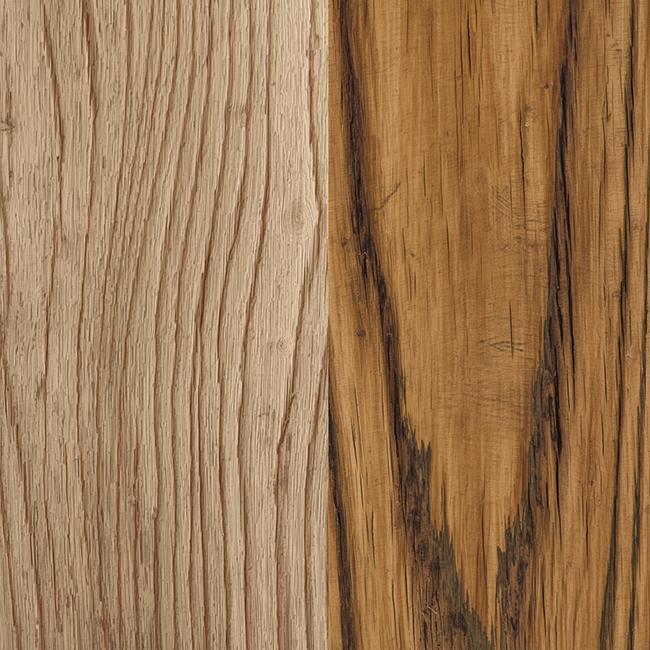
In Quarter-Sawn Oak, the grain is mostly straight and vertical, and the medullary rays are subtle, creating a simple, clean pattern.
In Tiger Oak, the grain remains vertical, but the medullary rays are much more pronounced, creating bold, wavy stripes that resemble a tiger pattern.
The logs used for Tiger Oak are specially selected for their prominent rays, which are responsible for the striking “tiger stripe” pattern. This pattern adds a decorative, eye-catching look, making it a popular choice for high-end furniture and flooring.
Due to its unique appearance and the selective process of choosing the logs, Tiger Oak tends to be more expensive than regular quarter sawn oak. The price difference can be around 20-30% higher, as the wood is rarer and requires more careful selection and finishing.
What is Quarter-Sawn Oak?

Oak is a type of wood that comes from the oak tree, renowned for its strength, durability, and beautiful grain patterns. There are two main types of oak: white oak and red oak.
Quarter-sawn is actually a wood cutting technique used to makes the wood more stable, stronger and enhance the grain pattern of the wood, resulting in a unique grain pattern, more stable and durable piece.
Quarter-Sawn Oak is a wood cutting technique in which oak wood is cut in a way that makes the grain pattern more stable and strong.
Quarter sawn oak refers to oak wood that is cut using the quarter-sawn method. The wood is cut in a way that creates a more stable and durable grain pattern.
In this process, a round log of wood is first cross-cut down the center to create 4 equal parts (wedge-shaped), and then boards are cut from each quarter. This method keeps the wood grain straight and tight, making the wood more durable.
What is tiger oak?

Tiger Oak is actually a fancier version of quarter-sawn oak. The only difference is in the grain pattern, as the wood species remain the same (mostly white or red oak).
In Tiger Oak, logs are carefully selected for their naturally heavy rays, creating a distinctive grain pattern. In contrast, regular quarter-sawn oak features a more mixed variety. To learn more about whether Tiger Oak is still valuable today, check out our blog on “Is Tiger Oak Still Valuable?”.
Quarter-Sawn Cutting Method
A round log of wood is first cross-cut (like a + sign) down the center to create four equal quarters (wedge-shaped pieces), which is why it’s called “quarter-sawn.” Then, boards are cut from each quarter.
When cutting the quarter-sawn boards, the angle of the cut is directed outward from the wedge tip. This cutting technique keeps the grain straight and tight.
The quarter-sawn wood cutting technique was first used by European craftsmen in the 17th century.
This method was specifically developed for making furniture and flooring, as it helps to make the wood grain more stable and increases its durability.
Comparison Tiger vs Quarter sawn oak
Origin of Quarter-Sawn Oak
Quarter-sawn oak became widely popular in the 19th century when American furniture makers adopted it.
This cutting technique gained popularity during that time, as people needed more stable and durable wood for furniture and flooring. It is still considered a standard for high-quality wood today.
This method makes the wood grain pattern straight and tight, improving both its appearance and strength. Quarter sawn oak is still used today in the making of both traditional and modern furniture.
Origin of tiger oak
Oak wood that is cut using the quarter-sawn technique, but it called because its medullary rays are much more noticeable.
Appearance
In reality, there is practically no difference in terms of structural or functional aspects. Both are quarter-sawn oak, and both have the same strength, stability, and warp resistance.
The only difference is aesthetic:
- Tiger Oak: The medullary rays are more prominent, giving it flashy, wavy stripes (the “tiger” pattern).
- Normal Quarter Sawn Oak: The grain is straight and uniform, less flashy.
In other words, if you only need stability and durability, both are the same. But if you’re looking for a specific look and decorative appeal, then go for tiger oak.
So, it is simply a “premium appearance grade” with no extra advantage in terms of structure or function.
appearance of Quarter Sawn oak
The grain pattern of Quarter Sawn Oak features straight lines that are more clearly visible.
These straight lines give the wood a clean, organized, and structured appearance, which looks visually neat and refined.
- The grain consists of straight vertical lines, creating a perfectly disciplined pattern.
- You may also notice light, shiny flecks or streaks on the surface (medullary rays).
- The overall pattern is calm, uniform, and neat.
appearance of Tiger oak
Quarter-sawn with extra bold shiny streaks. That’s the only difference.
It has a bold, wavy, flashy “tiger stripes” pattern. These stripes shine on the surface of the wood, giving it a decorative look.
The structure, strength, and stability are the same — the only difference is in the appearance.
Quarter sawn oak gives a simple, straight grain. Tiger Oak is the flashy, dramatic, striped version of the same quarter-sawn wood.
Why does Tiger Oak look different from quarter sawn oak despite the same cutting method?
Tiger Oak looks different from normal quarter-sawn oak because of the following reasons:
- Heavy Medullary Rays: The natural “rays” inside the oak become straight and visible when cut quarter-sawn. In Tiger Oak, these rays are very bold, shiny, and have a strong contrast, creating the tiger pattern.
- Cutting Angle: It is usually cut at nearly a perfect 90° angle, which highlights the rays the most. In normal quarter-sawn oak, the angle is not as perfect, so the pattern is milder.
- Wood Piece Selection: The wood logs are specially selected where the rays are naturally heavy. In normal quarter-sawn oak, the variety is mixed.
- Finishing: It receives a finishing that gives the rays a mirror-like shine. Normal quarter-sawn oak may appear matte or simple.
Because of these factors, Tiger Oak has a bold zebra/tiger stripes pattern, while normal quarter-sawn oak has a softer, more controlled pattern.
Stability, Durability & Cost
Stability
If we compare, Quarter-Sawn Oak is slightly more stable than Tiger Oak, with less tendency to cup or twist. While both are primarily chosen for its bold appearance, so the focus is more on its look rather than stability.
The stability difference between the two is minor, but Quarter-Sawn Oak holds a slight advantage in terms of overall strength and stability.
Both provide exactly the same stability.
The reason is simple:
- Both are made from the quarter-sawn cut.
- In both, the grain is vertical.
- Both have low movement (shrink/swell).
Difference = 0%
(If we were to be completely honest, the maximum difference would be around 1-2%, which is negligible.)
Durability
Both are equally durable because they are made from the same oak wood. The difference is almost negligible. Quarter-sawn oak has slightly better moisture resistance, but overall, the durability is the same.
- Wood species: The same (oak).
- Cutting style: The same (quarter-sawn).
- Strength, hardness, moisture behavior: Identical.
Difference = 0%
Tiger Oak is not a “stronger” version of quarter-sawn oak — it simply has a more attractive grain pattern.
Cost Reality: Tiger Oak vs Quarter Sawn Oak
This is where the real difference comes in. Tiger Oak has a fancier look, which makes its price noticeably higher. Quarter-sawn oak typically falls within a more standard price range.
The cost of oak furniture varies, but Tiger Oak is generally 20-40% more expensive than regular quarter-sawn oak.
The price difference is not due to strength or stability — it’s mainly because of the selective appearance. Tiger Oak is more expensive because:
- The medullary rays with bold and uniform patterns are rarer.
- It has a higher visual grading.
- There is a greater decorative demand for Tiger Oak furniture.
There is no real difference in the actual material.
Both are oak wood. What makes it different—and more expensive—is its appearance and rarity, not its strength or durability.
So, when looking for oak furniture prices, expect Tiger Oak to cost more due to its premium appearance.
| Feature | Quarter Sawn Oak | Tiger Oak |
|---|---|---|
| Stability | High stability: cuts the log so growth rings are more radial → less warping and cupping. (Chelsea Plank Flooring) | Essentially same wood & cut method, so stability is comparable. The difference is in visual figure, not structural. |
| Durability | Very durable: the tighter grain and medullary ray structure help resist moisture effects and surface checking. (Hewins Oak) | Durability matches quarter sawn oak (because it is quarter sawn oak with figure). The “tiger” pattern doesn’t affect strength significantly. |
| Cost | Lower baseline cost compared to special figured boards. The manufacturing process is more difficult than plain sawn, so cost is higher than plain‐sawn oak. (Hewins Oak) | Higher cost: because of visually distinctive tiger stripes / figure + rarity. Often priced 10% to 40% higher depending on figure & seller (as you mentioned). |
| Visual/Pattern | Straight grain, subtle ray flecks possible, but more uniform. | Prominent “tiger stripe” or “ray flecks” pattern, highly decorative. (Veneer Factory Outlet) |
| Supply & Rarity | More common than heavily figured boards; more available. | Rarer: Only certain logs/cuts show the strong tiger pattern → supply limited → price premium. |
What Makes Tiger Oak Special?
It is simply quarter sawn oak with a unique visual pattern, called a “tiger stripe” effect or “ray flecks.”
These patterns are created by medullary rays in the wood, which become visible only when the wood is cut in a specific way.
This distinct pattern gives it a highly decorative and eye-catching look, making it stand out from ordinary quarter sawn oak.
Why Does Tiger Oak Cost More?
- Visual Uniqueness = Higher Value
The striking tiger stripe pattern makes the board look premium and artistic.
Collectors, furniture makers, and woodworkers often pay extra for boards with strong, distinctive patterns. - Rarity and Limited Supply
Not all quarter sawn oak shows clear tiger stripes. The boards that do are less common, which naturally increases their price. - Higher Demand for Decorative Use
Because of its beauty and uniqueness, it is in higher demand for premium furniture, antique restoration, and design projects.
| Feature | Quarter Sawn Oak | Tiger Oak |
|---|---|---|
| Material | Same oak wood | Same oak wood |
| Pattern | Straight grain | Tiger stripe / ray flecks |
| Look | Classic & clean | Decorative & eye-catching |
| Price | Standard | 10–40% higher |
| Why more expensive? | — | Rarity + visual uniqueness |
The main difference between tiger oak and quarter sawn oak is not the material—but the pattern, rarity, and appearance. That visual uniqueness is what turns a common oak board into a more valuable, premium product.